
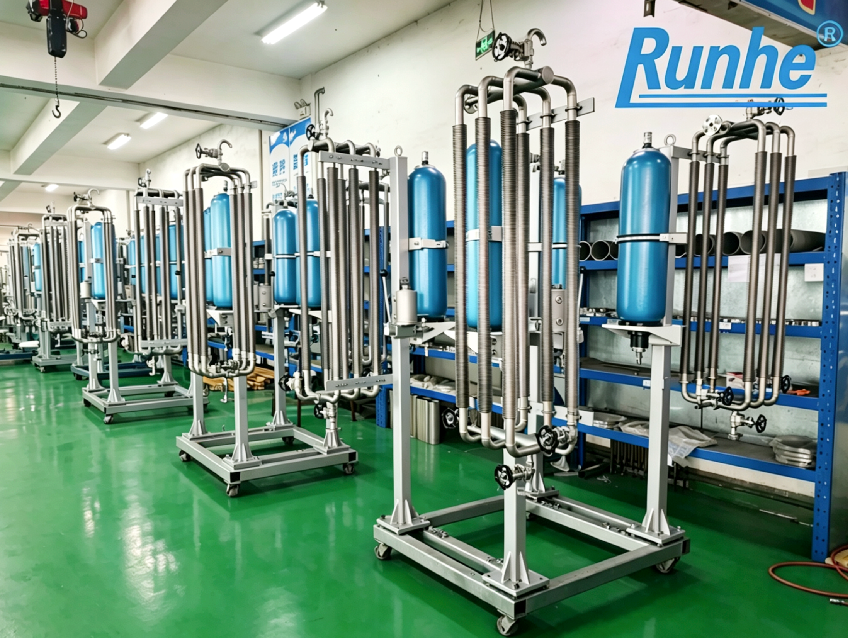
Will pipeline freeze blockage and barrier fluid solidification happen to air-cooled units in severe cold regions?
Explanation
The ambient temperature can drop to minus 30 degrees Celsius or even lower in frigid areas. As air-cooled Plan 53B systems adopt air cooling instead of water cooling,
exposed pipelines, accumulators and heat exchangers lose heat rapidly. Low temperature greatly increases barrier fluid viscosity and impairs fluid flow,
which tends to cause pipeline blockage.
If ambient temperature goes below the freezing point of barrier fluid, the fluid will solidify and interrupt internal circulation. Consequently, mechanical seals will overheat and break down.
The risk rises during equipment downtime, as stationary residual fluid keeps cooling down.
Main causes cover outdoor installation without thermal protection, unsuitable barrier fluid selection, undrained residual fluid after shutdown and overcooling of air-cooled exchangers.
Recommended solutions are listed as follows:
- Adopt special barrier fluid with low freezing point
- Install thermal insulation layers on pipelines and key components
- Equip electric heat tracing systems to maintain stable operating temperature
- Optimize pipeline layout to prevent fluid stagnation
- Fully drain residual fluid when shutting down equipment
Adopt enclosed integrated skid structure to shield units from low external temperature
#Air-cooledPlan53B#Barrierfluid #Freezeblockage#Severecoldregion#Electricheattracing#Mechanicalsealquestion


 export@rhseal.com


