
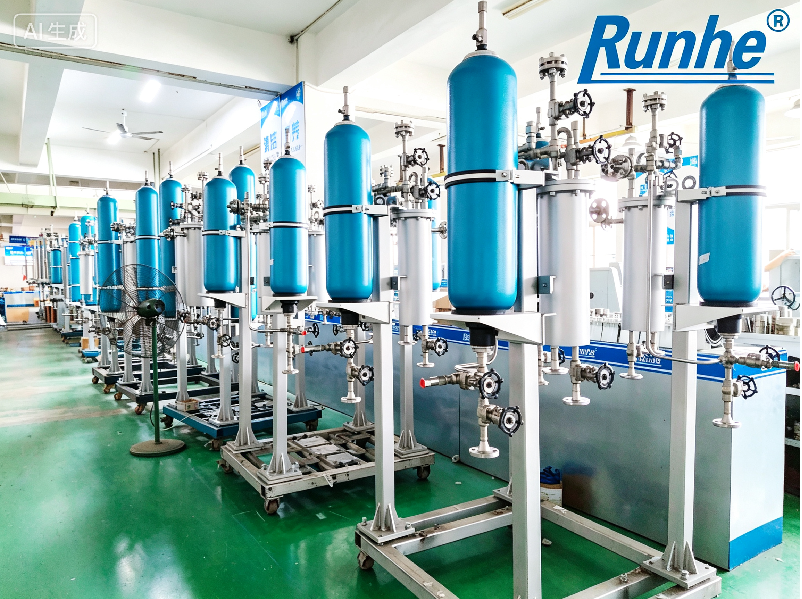
Why API Plan 53B Is Widely Used in Industrial Sealing Systems
API Plan 53B has become one of the most popular seal support systems for industrial process pumps, especially in petrochemical, chemical and oil‑and‑gas industries. Its wide industrial
adoption comes from its excellent safety performance, robust mechanical structure and strong adaptability to harsh operating conditions.
1. Superior Safety to Minimize Hazardous‑Media Leakage
Plan 53B maintains barrier‑fluid pressure higher than pump‑cavity pressure to create a positive‑pressure isolation layer. It prevents toxic, flammable, explosive and highly corrosive
process fluids from leaking to the atmosphere. This effectively reduces VOC emissions, fire risks and other safety hazards, meeting modern industrial environmental and safety
regulations. Compared with the Plan 52 atmospheric buffer system, the closed‑pressurized loop of Plan 53B maximizes the prevention of process‑fluid outward leakage, making it the
preferred choice for high‑risk working conditions.
2. Ideal Solution for Crystallizing, Coking and Particle‑laden Media
Many chemical fluids tend to crystallize, coke or contain solid particles upon contact with air, which can rapidly wear mechanical seal faces. Plan 53B fills the seal chamber with clean
circulating barrier fluid, physically separating process media from seal faces. It avoids abrasive damage and crystallization‑related failures, greatly extending mechanical‑seal service life
and cutting down on‑site maintenance frequency.
3. Reliable Cooling for High‑Temperature Operations
Fitted with an external heat exchanger and self‑circulating pumping ring, Plan 53B continuously cools the seal assembly. It steadily removes friction heat and heat conducted from
process media, preventing O‑rings and other seal components from aging, hardening or failing under prolonged high‑temperature operation. It delivers stable sealing performance for
high‑temperature industrial pumps.
4. Gas‑Liquid Separation Design for Stable High‑Pressure Operation
Unlike Plan 53A, Plan 53B uses a bladder accumulator to fully separate nitrogen gas from barrier fluid. No air bubbles or dissolved gas form inside the circulation loop, avoiding unstable
seal‑fluid films and dry‑friction issues under high pressure. This self‑pressurized system does not require a continuous external nitrogen supply, delivering simpler on‑site installation and
higher operational reliability.
5. Compatibility with Negative‑Pressure Pump Conditions
The conventional Plan 52 system cannot operate under vacuum or negative‑pressure conditions, as negative pressure draws ambient air into the seal chamber and ruins sealing
performance. The closed loop of Plan 53B keeps consistent positive pressure, and works well for many negative‑pressure pump applications that other sealing schemes struggle to
handle.
6. Real‑Time Pressure Monitoring for Predictive Maintenance
Plan 53B uses accurate pressure readings to evaluate system status. Engineers can detect minor barrier‑fluid leakage and seal wear at an early stage, preventing sudden equipment
breakdowns and unplanned production shutdowns, and improving the continuous‑operation efficiency of industrial production lines.
7. Lower Overall Operating Costs for Long‑Cycle Production
Chemical and petrochemical plants rely on long‑cycle continuous production. Unexpected seal failure leads to heavy expenses including production downtime, process‑medium
replacement and equipment repair. Plan 53B supports long‑term stable seal performance, lowers leakage risks and reduces component replacement frequency, thus cutting overall plant
maintenance costs.
#pressurizeddoublesealsystem# barrierfluidcirculationsystem#petrochemicalpumpsealingsolution#bladderaccumulatorsealplan53B#zeroleakagepumpsealingsystem


 export@rhseal.com


